
How to Stay Active at a Desk Job
For many people, a desk job quietly reshapes daily life. Hours pass seated. Movement becomes something you plan for later—before work, after work, or on weekends—rather than something that happens naturally throughout the day.
If you’ve ever ended a workday feeling stiff, foggy, or oddly restless, you’re not alone. Learning how to stay active at a desk job isn’t about turning your office into a gym or forcing endless productivity hacks into your schedule. It’s about restoring balance to a day that naturally leans toward stillness.
Staying active at work is less about intensity and more about presence—noticing your body, responding to it, and letting movement become part of how you work instead of something that competes with it.
Why Desk Jobs Can Disconnect You From Movement
Desk jobs don’t just limit physical activity—they reduce variety. Your body thrives on change: shifting positions, walking, reaching, pausing, and resetting. When most of the day is spent in one posture, those signals fade into the background.
Over time, this can create subtle but persistent effects. You may notice tightness in places that never used to bother you, a dip in afternoon energy, or focus that’s harder to maintain — not because of the work, but because your body has been still for too long.
The challenge is desk jobs rarely invite movement unless you intentionally reintroduce it.

Rethinking What It Means to “Stay Active” at Work
One of the biggest barriers to staying active at a desk job is the assumption that activity must be formal or strenuous. When movement only “counts” if it looks like exercise, it becomes easy to dismiss the smaller moments that matter too.
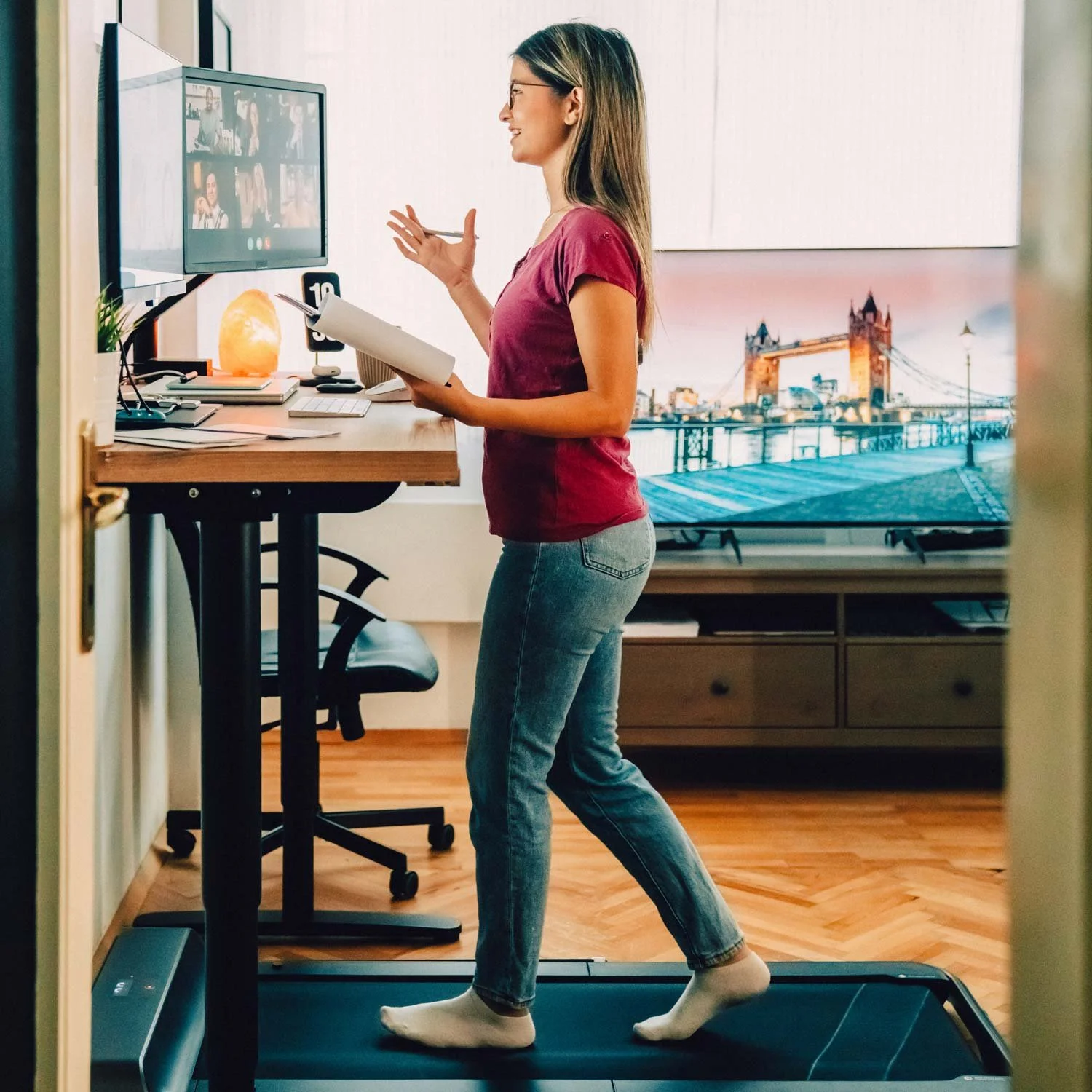
Activity during the workday is often subtle. It might look like standing up to think through a problem, walking while you’re on a call, or stretching simply because your body feels tight. These movements don’t need to be efficient or optimized. Their value comes from breaking long periods of stillness and reminding your body that it’s meant to move.
When you stop trying to earn movement and instead allow it, staying active becomes far more sustainable.
Using Transitions as Built-In Movement Opportunities
The workday is full of natural transitions—finishing a task, switching meetings, waiting for something to load, refilling your water. These moments are easy to overlook, but they’re powerful opportunities to add movement without disrupting your flow.
Instead of pushing straight into the next thing, allow yourself to stand up, take a few steps, or stretch briefly before continuing. These micro-pauses help reset posture, release tension, and reduce the sense of being locked into your chair.
Over time, these transitions create a rhythm. Movement becomes something that happens naturally throughout the day, not something you have to remember to do.
Changing Positions
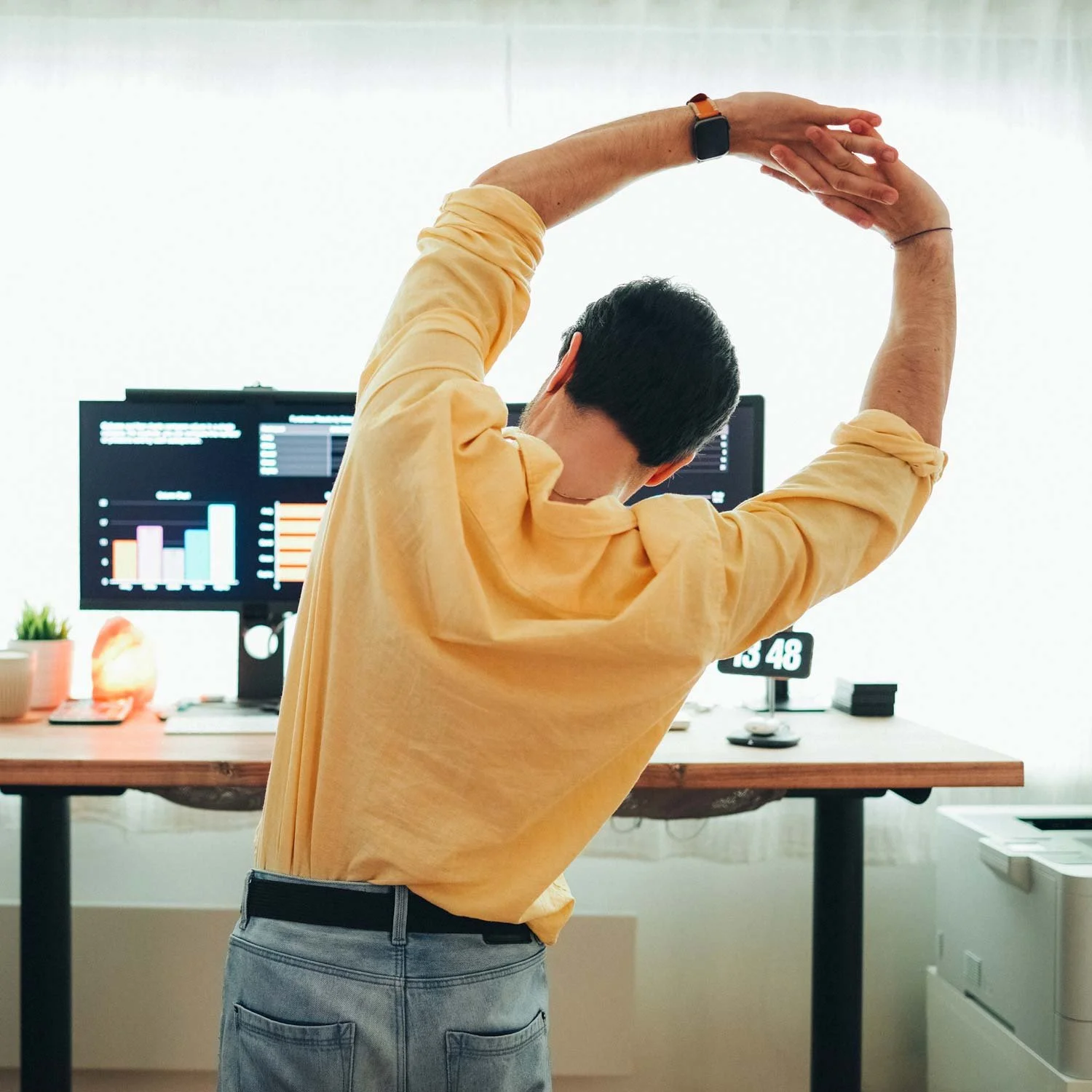
Standing can be helpful, but what likely matter more is regularly changing positions—sitting, standing, shifting weight, walking briefly, or stretching.
You can increase standing time simply by choosing to stand during moments like phone calls, reviewing notes, or thinking through ideas. Even short periods of standing help wake up muscles that have been inactive and relieve pressure from prolonged sitting.
The goal isn’t to replace sitting entirely. It’s to avoid staying in one position for too long. Variety matters more than posture perfection.
Walking Without a Destination
One of the simplest ways to stay active at a desk job is to walk without trying to accomplish anything else. Short walks—five or ten minutes—can reset both body and mind.
These walks don’t need to be productive. They don’t need to involve errands, steps goals, or podcasts. Walking just to move helps circulation, loosens stiff joints, and often brings mental clarity that sitting cannot.
Even a brief walk around your building, down the block, or through your home can change how the rest of your workday feels.

Movement Before and After Work Still Matters
While adding movement during the workday is important, it doesn’t have to carry all the responsibility. Movement before and after work can help offset long periods of sitting.
This might be a short walk in the morning to signal the start of the day or a few minutes outside in the evening to create a sense of closure. These bookends help your body transition between work and rest and reinforce the idea that movement is part of daily life, not something reserved for workouts.
Avoiding the Trap of Overcompensation
A common reaction to sedentary work is trying to “make up for it” with harder workouts. While exercise is valuable, relying on intensity alone can lead to burnout or injury—especially if your body is used to being inactive all day.
Try engaging your body with gentle, frequent movement during the day. And, instead of asking whether you’ve done enough, consider whether movement felt supportive. That shift removes pressure and makes activity something you can sustain long-term.

The Mental and Emotional Benefits of Moving During the Day
Movement isn’t just about muscles and joints—it can play a significant role in how you think and feel.
Regular movement breaks don’t just help the body, they create mental room. They can help make the day feel more open, less heavy, and easier to move through
You may discover that work feels lighter not because tasks change, but because your body is no longer fighting against prolonged stillness.
How the JoyWild 30-Day Challenge Supports Desk Workers
Staying active at a desk job can start to feel heavy when it turns into another thing to manage. Sometimes what helps most isn’t doing more, but approaching the day with a little more intention.
The JoyWild 30-Day Challenge isn’t focused on exercise or productivity. It’s built around small, gentle prompts that invite you to slow down, step outside a bit more, and pay closer attention to how your days feel. Some prompts involve light movement. Others are about rest, reflection, or simply changing your environment for a moment. That mix is intentional.
For people who spend much of their time at a desk, the challenge offers a quiet kind of support. One simple prompt a day can help create small shifts—bringing in moments of movement or stillness without pressure or expectation.
It isn’t about changing everything at once. It’s about giving your days a little more room to breathe.
Tools That Can Support Movement at a Desk Job
Tools can make staying active at a desk job easier—but they aren’t a prerequisite. They work best when they support habits you’re already building, not when they’re expected to solve the problem on their own.
If you’re considering tools, it helps to think of them as invitations to move rather than commitments to be active all day. The right tool is the one that makes movement feel easier, not more demanding.
Sit-Stand Desks
Sit-stand desks are one of the most common tools for adding movement to a workday, and for good reason. They make it easier to change positions without interrupting your workflow.
The real benefit isn’t standing all day—it’s having the option to shift. Moving between sitting and standing helps reduce stiffness, improves circulation, and encourages more frequent posture changes. Some people find that standing feels best during lighter tasks like reading, calls, or brainstorming, while sitting works better for focused or detailed work. You’ll have to find out what works best for you.
When used flexibly, a sit-stand desk adds variety. When used rigidly, it can become just another rule. The goal is movement, not compliance.
Desk Treadmills and Walking Pads
Desk treadmills—often called walking pads—allow for slow, steady walking while working. They tend to work best for tasks that don’t require precision, such as meetings, emails, or listening-based work.
Walking while working isn’t about speed or step counts. Even very slow movement can reduce restlessness and bring a different kind of focus to your day. For some people, walking may help ideas flow more easily than sitting still.
That said, these tools aren’t for everyone. They take up space, require adjustment, and often work best when used intermittently rather than continuously. Many people find success using them for short windows instead of trying to walk for hours at a time.
Under-Desk Pedals and Small Movement Tools
Under-desk pedals, foot rockers, or balance boards offer subtle movement without requiring you to change how you work. These tools encourage gentle muscle engagement while remaining low-profile.
They’re especially useful in environments where standing or walking isn’t practical. While the movement may be small, it still breaks up long periods of complete stillness—which is often the real issue with desk work.
These tools act as quiet reminders that your body is still present, even when your attention is elsewhere.
Ergonomic Accessories That Encourage Movement
Chairs, footrests, and monitor setups won’t make you active on their own, but they can make movement more comfortable and accessible. When your workspace fits your body, you’re more likely to shift positions, stand up, or move naturally instead of locking into one posture.
Setups that allow easy adjustment tend to encourage more movement throughout the day, simply because changing positions doesn’t feel like a disruption.
Tools Support Awareness—They Don’t Replace It
No tool can replace awareness. Even the best setup won’t help if long stretches of stillness go unnoticed.
Tools work best when paired with simple habits: standing between tasks, walking during calls, or stepping away from your desk when energy dips. Used this way, they support a natural rhythm of movement rather than trying to force one.
Whether through a tool or a simple daily choice, the goal is the same: bringing motion back into a day that often forgets it.

Staying Active Is a Relationship, Not a Rule Set
The most sustainable way to stay active is by paying attention to your body, not forcing routines. When you pay attention to how your body feels and respond with small adjustments, movement becomes a form of care rather than obligation.
When movement serves you, you keep coming back to it.
Small Movement Changes How Your Day Feels
Learning how to stay active at a desk job doesn’t necessarily require drastic changes. It starts with awareness and grows through small, consistent choices.
Stand when it feels right. Walk when your body asks for it. Stretch without needing a reason. Step outside when you can.
Those moments add up—not just physically, but mentally and emotionally.