
Hiking With the Family
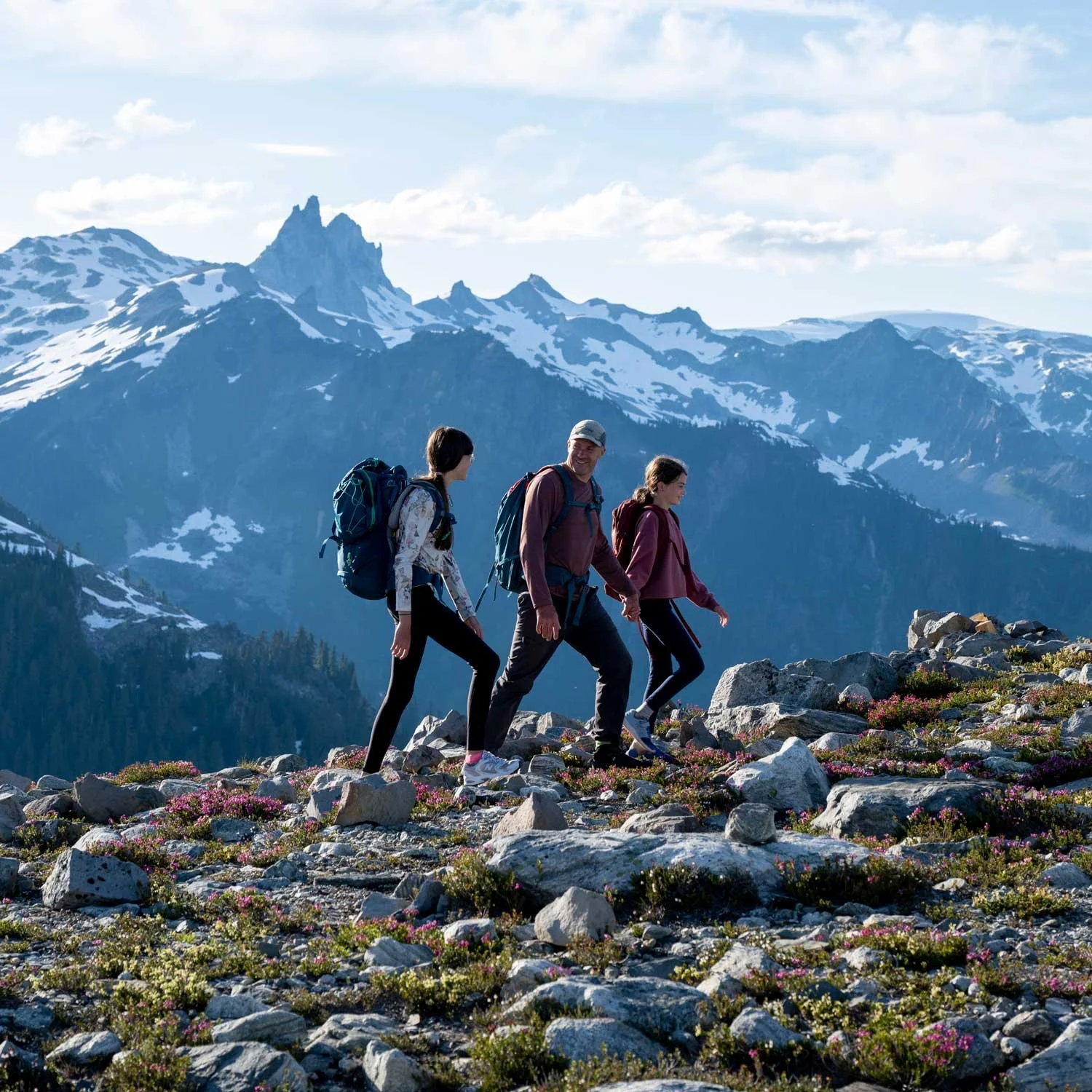
Hiking with the family is one of the most accessible ways to spend time together outdoors. It doesn’t demand perfect planning, peak fitness, or remote wilderness. A family hike can be a short loop after school, a weekend walk through a local open space, or a longer outing that unfolds slowly. What makes it meaningful isn’t distance or difficulty—it’s the shared experience.
For many families, hiking becomes a way to reconnect. Phones stay in pockets. Conversations happen naturally. Movement feels purposeful but unforced. Over time, hiking with the family can shift from an occasional activity to a familiar rhythm that grounds everyone.
Why Hiking With the Family Works
Hiking fits naturally into family life because it’s adaptable. Different ages, personalities, and energy levels can all coexist on the same trail. One person might move quickly, another slowly. Some focus on the destination, others on what’s along the way. That variety doesn’t work against hiking—it’s what makes it effective.
Hiking with the family supports:
Gentle physical activity without pressure or performance
Emotional regulation through steady movement and fresh air
Shared experiences that don’t rely on entertainment
A sense of togetherness that feels organic, not forced
Unlike many activities, hiking doesn’t require constant instruction. The trail provides structure, while still leaving room for wandering, pausing, and conversation.

Choosing the Right Trail for Your Family
Trail choice plays a big role in how a family hike feels, especially for kids. The best trails are often the ones that allow flexibility rather than demanding endurance.
When choosing a trail for hiking with the family, consider:
Shorter distances with optional extensions
Loop trails or out-and-back routes that allow easy turnarounds
Gentle elevation changes rather than long climbs
Features that spark curiosity—streams, bridges, overlooks, open meadows
Familiar trails can be just as valuable as new ones. Repeating the same hike lets kids notice changes over time and build confidence, while adults spend less mental energy navigating and more time being present.
What to Bring (Keeping It Simple)
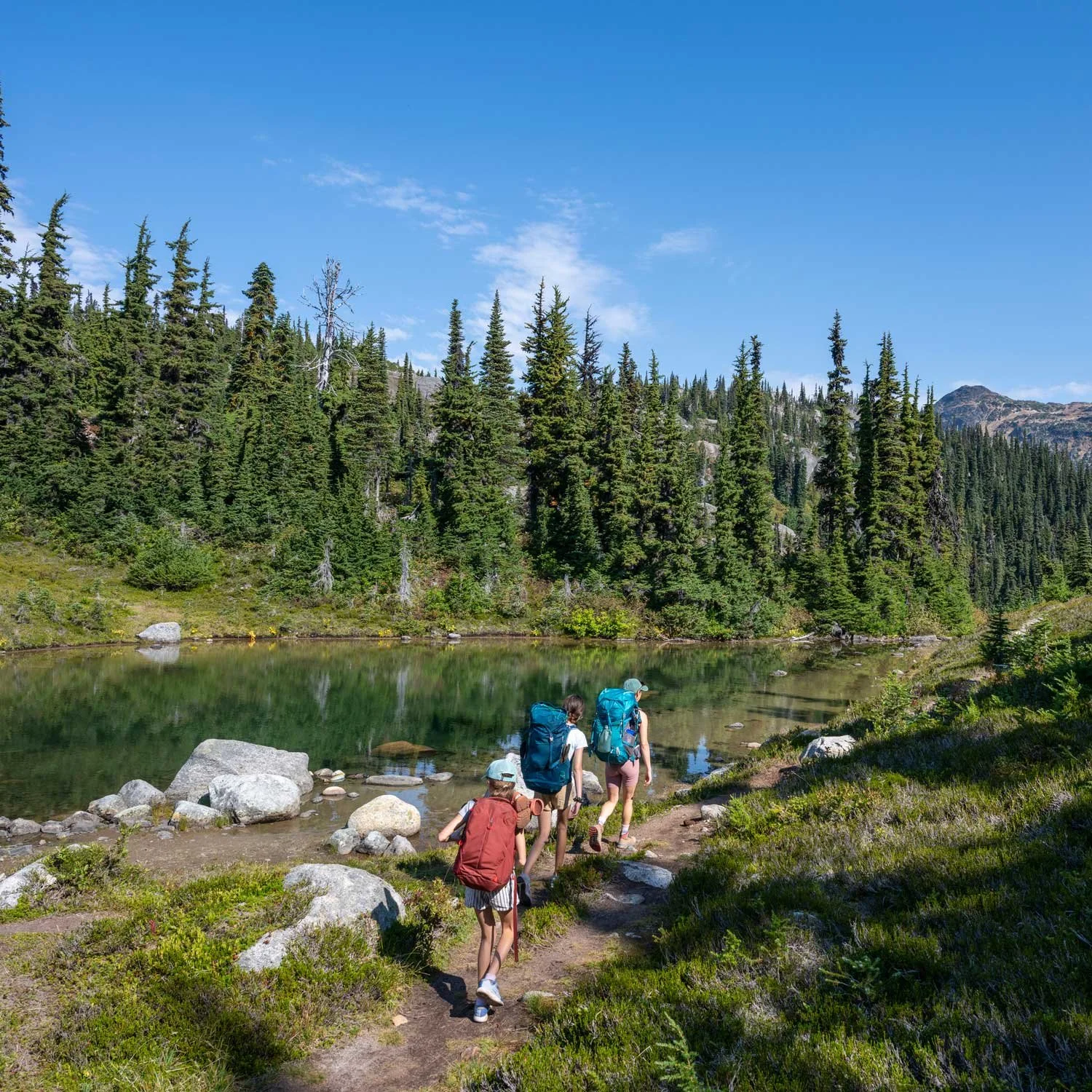
Planning and packing for hiking with the family doesn’t need to feel like preparing for an expedition. Simplicity helps keep the outing relaxed.
Here are some items that support comfort and ease:
Comfortable footwear suited to the trail
Layers that adjust to temperature changes
Water and familiar snacks
A lightweight backpack to keep hands free
Letting kids help pack—or carry a small item themselves—can turn preparation into part of the experience. It reinforces that hiking is something they’re participating in, not just being taken along for.
Setting Expectations That Support Enjoyment
Many family hikes fall apart because expectations aren’t aligned. Adults often think in terms of distance, pace, or endpoints. Kids usually care more about how the hike feels moment to moment.
Before starting, it helps to:
Talk about the plan in simple, flexible terms
Emphasize that stopping, exploring, or turning around is okay
Keep the focus on the experience rather than the outcome
When expectations are loose, there’s less tension. A hike that ends early but feels positive is far more successful than one that pushes too hard and leaves everyone drained.
Making Hiking Engaging for Kids
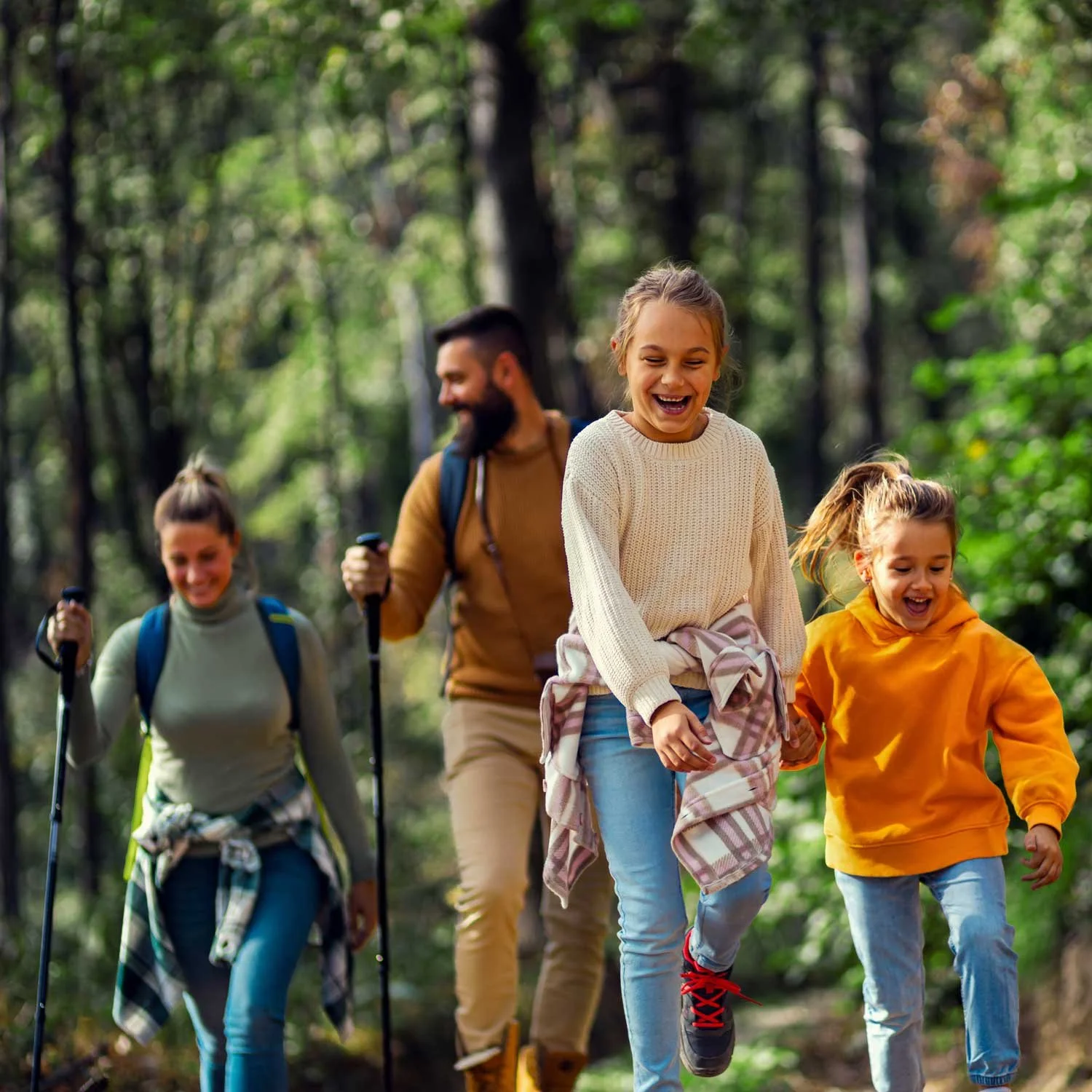
For kids, hiking with the family becomes more enjoyable when it feels like exploration rather than obligation. Engagement often comes from involvement, not motivation speeches.
Ways to naturally engage kids on a hike include:
Letting them choose when to stop or what to explore
Turning observations into informal games or questions
Allowing time for rocks, sticks, leaves, and trailside discoveries
Acknowledging effort without tying it to distance or speed
Some hikes will be energetic and chatty. Others will be quiet or slow. Both are valid. Over time, kids learn that hiking with the family isn’t about performing—it’s about being outside together.
The Emotional and Mental Benefits of Family Hiking
Hiking with the family supports more than physical movement. The steady rhythm of walking often helps conversations unfold without pressure. Silence feels more comfortable outdoors. Emotions tend to soften when everyone is moving in the same direction.
Regular family hikes can:
Reduce stress and restlessness
Create space for open-ended conversation
Support emotional regulation for both kids and adults
Offer a shared sense of calm and presence
These benefits often show up subtly, not all at once. A family hike might not feel transformative in the moment—but its effects linger.
Making Family Hiking Sustainable
Sustainability matters more than ambition. Hiking with the family works best when it fits naturally into your life instead of competing with it.
To make it sustainable:
Keep hikes short enough to feel approachable
Choose nearby trails that don’t require heavy planning
Go often, even if outings are brief
Let hikes evolve as kids grow and interests change
Consistency builds familiarity. Familiarity builds comfort. And comfort makes it easier to keep going—even during busy seasons.
Learning to Hike as a Family Is a Process
Learning to hike with the family isn’t something you master all at once. Like any shared habit, it develops gradually—through trial, adjustment, and repetition. Early hikes might feel awkward or uneven. Someone gets tired sooner than expected. Another person wants to stop constantly. That doesn’t mean you’re doing it wrong. It means you’re learning.
Each hike offers feedback. You learn which trails feel approachable, how long outings tend to last, and what helps everyone stay engaged. Over time, patterns emerge. You begin to recognize when to push forward and when to pause. Preparation becomes simpler. Expectations become more realistic.
As kids grow, the process continues. What worked one season might not work the next. Attention spans change. Energy shifts. Interests evolve. Hiking adapts alongside them. A short loop that once felt long becomes a warm-up. A familiar trail becomes a place to notice new details rather than just reach the end.
The key is to view family hiking as an ongoing relationship, not a skill to perfect. Progress shows up quietly—in confidence, comfort, and willingness to go again. When hiking is treated as a process, not a performance, it becomes easier to stay patient, flexible, and open to whatever the trail brings.

Creating Shared Moments with Loved Ones
Hiking with the family isn’t about raising expert hikers or checking trails off a list. It’s about creating shared moments in a setting that encourages movement, curiosity, and connection.
Some hikes will feel smooth and joyful. Others will feel slow, messy, or unfinished. All of them count. Over time, these outings form a quiet thread through family life—one that supports togetherness, presence, and a deeper relationship with the outdoors.